


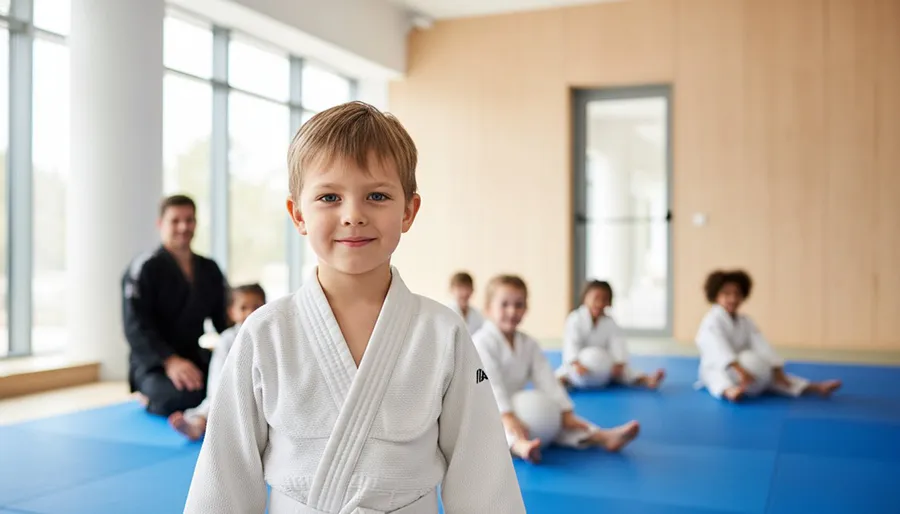
As a parent, choosing the right activity for your young child can feel like a significant decision. You want to nurture their budding confidence and coordination, but questions naturally arise: Are they too young for a martial art? Is it safe? What will they truly learn beyond physical techniques? These are valid concerns when considering an activity like judo. In our commitment to fostering an environment of excellence, we believe in empowering parents with clear, professional insights into activities that support a child's holistic development.
This guide is designed to ease those concerns and illuminate the profound benefits of Judo for preschoolers. We will explore how this respected discipline, often called the “gentle way,” is far more than just a sport. You will discover how it builds incredible physical literacy, enhances focus and discipline, and fosters crucial social skills like respect and cooperation-all within a safe, structured, and playful setting. Join us as we uncover how Judo can empower your child with a foundation of confidence and resilience that extends far beyond the mat.
Key Takeaways
- Discover how Judo provides a comprehensive workout that enhances your child's coordination, balance, and overall physical fitness in a safe, playful environment.
- Understand how the disciplined yet supportive structure of a Judo class builds crucial life skills like focus, resilience, and a confident growth mindset.
- Explore how judo, the 'Gentle Way', uniquely teaches preschoolers vital social lessons of respect, empathy, and cooperation through its traditional practices.
- Receive practical guidance on the ideal age for your child to start and what to look for when choosing a high-quality, child-focused program.
Table of Contents
- What is Judo? Understanding the 'Gentle Way' for Kids
- Key Physical Benefits: Building a Foundation for Life
- Mental and Emotional Growth: More Than Just Physical Activity
- Social Skills on the Mat: Learning Respect and Empathy
- A Parent's Guide to Starting Judo
What is Judo? Understanding the 'Gentle Way' for Kids
When parents first consider a martial art for their child, they might picture intense fighting. However, Judo is fundamentally different. Originating in Japan, its name, 柔道 (Jūdō), translates to 'The Gentle Way'. This isn't a sport about aggression; it's a profound educational system designed to develop the body, mind, and character in a nurturing environment. Unlike martial arts that focus on kicks and punches, the practice of judo centres on using an opponent's own momentum against them through throws, pins, and holds. It's a discipline rooted in balance, respect, and control, making it an exceptional choice for a child's first introduction to structured physical activity.
Adapting Judo for the Early Years
At the preschool level, Judo is not about rigorous competition but about creating a joyful, safe, and engaging atmosphere where children learn through play. Sessions are built around fun, dynamic games that cleverly teach the core principles of Judo. Children might learn to tumble safely by pretending to be rolling logs, develop coordination through animal-themed movements, and improve their balance with playful challenges. The focus is always on cooperation, respecting training partners, and building confidence in a supportive setting.
The Core Principles Your Child Will Learn
Beyond the physical movements, your child will be introduced to the foundational philosophy that makes judo such a valuable tool for character development. The two main pillars are:
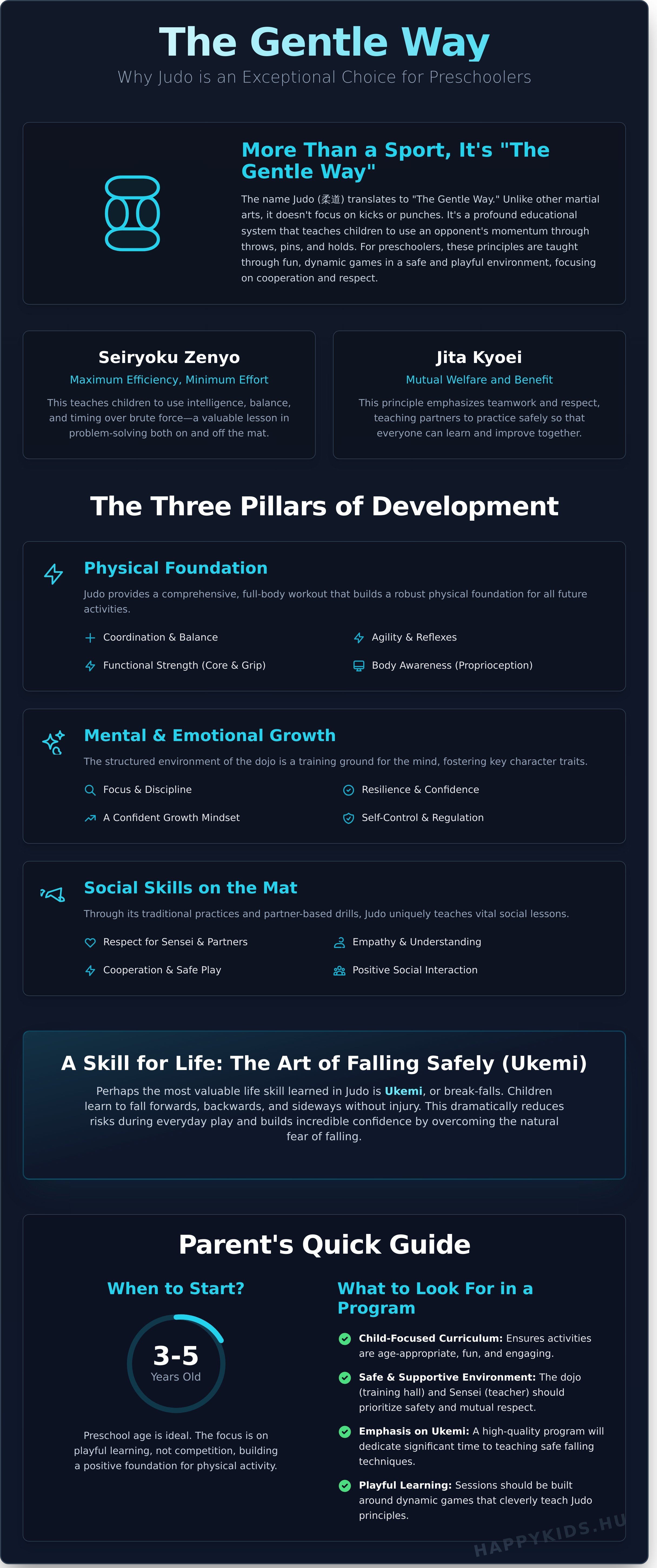
- Maximum Efficiency, Minimum Effort (Seiryoku Zenyo): This teaches children to use intelligence and balance over brute force, a valuable lesson in problem-solving both on and off the mat.
- Mutual Welfare and Benefit (Jita Kyoei): This principle emphasizes teamwork and the importance of practicing safely with a partner so that everyone can improve together.
These foundational concepts are central to the sport's philosophy, as detailed in many resources explaining What is Judo?. This learning journey is guided by the Sensei (teacher) in the Dojo (training hall), a respected space where discipline and mutual respect are paramount.
Key Physical Benefits: Building a Foundation for Life
In early childhood, physical development is the cornerstone of all future learning and activity. Judo, or judo as it is known in Hungary, provides a uniquely comprehensive full-body workout that goes far beyond a typical sport. Through a structured yet playful curriculum, children build a robust physical foundation that supports them not only on the mat but in every aspect of their lives, from the playground to the classroom.
Developing Coordination, Balance, and Agility
Our judo sessions are filled with dynamic games and activities designed to enhance crucial gross motor skills. Children learn to maintain their balance while standing on one leg, move with purpose in animal-walk exercises, and coordinate their limbs for complex movements. These playful drills improve reflexes and agility, teaching young learners to think on their feet and react swiftly-skills that are essential for physical confidence and participation in any future athletic endeavour.
Ukemi: The Art of Falling Safely
Perhaps one of the most valuable life skills learned in judo is Ukemi, the art of the break-fall. Children are taught how to fall forwards, backwards, and sideways without injury by distributing the impact safely across their bodies. This fundamental skill dramatically reduces the risk of injury during everyday play, whether tumbling on the playground or learning to ride a bicycle. More importantly, by mastering Ukemi, children overcome the natural fear of falling, which builds incredible resilience and confidence.
Functional Strength and Body Awareness
Judo develops practical, functional strength in a way that is perfectly suited for a growing child's body. Through grappling games and specific exercises, children build powerful core and grip strength without the need for weights. This training also sharpens their proprioception-the body's internal sense of its position in space. This enhanced body awareness is not just physical; it is deeply connected to a child's cognitive development and Mental and Emotional Growth, as it improves focus and self-regulation, allowing them to move through the world with greater safety and effectiveness.
DownloadFeedback & RecreateDelete
Mental and Emotional Growth: More Than Just Physical Activity
While the physical benefits of judo are clear, its profound impact on a child's character is where the true value lies. The dojo provides a structured, safe environment where children learn essential life skills far beyond throws and holds. In fact, scientific studies confirm the significant positive effects of judo on a child's Mental and Emotional Growth, showing improvements in executive functions and social behaviour. This ancient martial art is a powerful tool for shaping a child's mind and spirit.
Building Unshakable Self-Confidence
In judo, progress is visible and earned. Each new belt or stripe on a belt is a tangible symbol of dedication and achievement, giving a child an immense sense of pride. This confidence isn't just about accolades; it comes from the quiet competence of mastering a complex physical skill and the courage to perform it in front of their Sensei and peers. This newfound self-assurance naturally extends beyond the dojo, helping them navigate social and academic challenges with greater poise.
Developing Discipline and Focus
A judo class is a model of structured learning. From the formal bow (rei) that starts and ends each session to listening intently to the Sensei's instructions, children learn the value of respect and attentiveness. They practice waiting their turn and concentrating fully on the technique being taught. These rituals create a highly focused environment, helping to lengthen a young child's attention span-a critical skill that directly supports their academic success in the classroom and beyond.
Fostering Resilience and Perseverance
One of the first lessons in judo is how to fall safely (ukemi). This teaches a powerful life lesson: it's okay to fall, as long as you get back up and try again. When a child is gently thrown by a partner in a controlled setting, they learn not to fear failure but to see it as part of the learning process. Mastering a difficult new move requires consistent practice and determination, instilling a growth mindset and the understanding that true progress comes from perseverance.
Social Skills on the Mat: Learning Respect and Empathy
While judo is an individual sport in competition, its practice is fundamentally social. The dojo provides a unique, structured environment where children learn essential social and emotional skills that extend far beyond the mat. Each interaction with a training partner is an opportunity to develop empathy, trust, and cooperation, all under the expert guidance of a Sensei. This makes judo an exceptional tool for building character alongside physical strength.
The Foundation of Respect
Respect is the cornerstone of judo, taught from the very first moment a child steps into the dojo. This principle is woven into every aspect of the practice through timeless traditions. Children learn to:
- Show respect through bowing: They bow upon entering and leaving the dojo, to their Sensei, and to their partner before and after every practice. This ritual instills a deep sense of gratitude and mutual respect.
- Be a responsible partner: They quickly understand that their partner's safety is their responsibility. This fosters a profound sense of care and mindfulness in their actions.
- Value the rules: Rules are not seen as restrictive but as essential for creating a safe and productive learning environment for everyone.
Cooperation and Teamwork
The journey of improvement in judo is not a solitary one. Progress is impossible without the willing cooperation of a partner. Children learn that to master a technique, they must help their partner master it too. This reciprocal relationship teaches that individual success is often linked to the success of the group. Participating in group warm-ups, partner drills, and dojo games further nurtures a strong sense of community and team spirit among young practitioners.
Managing Emotions and Physicality
The dojo is a safe laboratory for learning emotional and physical self-regulation. Through the practice of randori (free practice), children learn to control their strength and channel their energy constructively. They experience both success and failure, learning to handle winning with humility and losing with grace-a vital lesson in sportsmanship. This controlled environment provides a healthy outlet for physical expression, teaching children about personal boundaries and consent in a clear, hands-on way.
This holistic approach to development, combining physical activity with emotional intelligence, is a core value in all our extracurricular programmes. Discover more about our enriching environment at Happy Kids International Kindergarten & Nursery.
A Parent's Guide to Starting Judo
Embarking on the judo journey with your child is an exciting step. A positive first experience is paramount, setting the stage for years of enjoyment and growth. For most children, the ideal age to begin exploring the foundational principles of judo is around four or five, when they have developed the necessary coordination and ability to follow group instruction. The initial focus is never on fighting, but on fun, movement, and building a solid base of safety and respect.
What to Look for in a Children's Judo Program
Choosing the right dojo (training hall) and program is the most critical decision you will make. The quality of the instruction and environment will directly shape your child's perception of the sport. Look for a program that prioritises holistic development in a nurturing atmosphere.
- A Qualified, Caring Instructor: The instructor (or sensei) should not only have a strong background in judo but also specific experience and a passion for teaching young children. Patience, positive reinforcement, and an ability to make learning fun are essential qualities.
- A Safe and Clean Training Space: The training area must be equipped with high-quality, clean mats (tatami) that are free of gaps or hazards. A well-maintained and organised space reflects the discipline that judo instills.
- A Focus on Fun and Development: For young children, the primary goal should be to develop physical literacy, confidence, and a love for the activity. A program that emphasises games, cooperation, and personal progress over winning is ideal for this age group.
At Happy Kids, we believe that all extracurricular activities should be an extension of our commitment to a loving, safe, and excellent learning environment. Explore the extracurricular activities at Happy Kids.
Preparing Your Child for Their First Class
A little preparation can help ensure your child walks onto the mat feeling confident and excited. Frame the experience positively, explaining that they will be playing fun games, learning how to roll like a superhero, and making new friends. On the day, make sure they are well-rested and have had a light, healthy snack an hour or two beforehand.
Before you invest in a special uniform, most schools will allow children to participate in comfortable sportswear, such as a t-shirt and tracksuit bottoms without any zips, buttons, or pockets that could cause injury. Later, they will need a Judogi, the traditional white uniform designed for the grips and throws of judo, which is both durable and symbolic of their commitment to learning.
A Foundation of Strength and Character Through Judo
As we've explored, Judo is far more than a sport; it is a comprehensive development tool that equips young children with skills for life. It builds a powerful physical foundation of balance and coordination while instilling invaluable lessons in discipline, resilience, and respect for others. Choosing the right judo programme is the first step in unlocking these incredible benefits for your child.
At Happy Kids, we provide an environment of excellence where these principles can truly flourish. Our programme is led by experienced and certified instructors dedicated to fostering growth in a safe, child-friendly learning environment. Here, your child will not only learn the techniques of the 'Gentle Way' but also thrive as a valued member of our diverse, multicultural community.
Discover how this powerful discipline can enrich your child's development. Learn more about our enriching afternoon activities at Happy Kids. Take the first step on this rewarding path and watch your child build a confident and respectful future, both on and off the mat.
Frequently Asked Questions About Judo for Children
Is Judo safe for a 4 or 5-year-old child?
Absolutely. At this introductory level, safety is the paramount concern. Classes for young children are designed to be playful, focusing on fundamental motor skills, balance, and coordination rather than combat. A core component of early training is learning how to fall correctly and safely (a technique called *ukemi*), which is an invaluable life skill. In a professional dojo with certified instructors and soft mats (*tatami*), the environment is carefully controlled to ensure a safe and encouraging experience.
Will practicing Judo make my child more aggressive?
Quite the opposite. The philosophy of Judo, which translates to "the Gentle Way," is founded on principles of discipline, respect, and self-control. Children learn to channel their energy in a structured and positive manner. The practice emphasizes mutual respect and cooperation with training partners. This structured environment helps children develop emotional regulation and teaches them that physical skills are to be used with great care and responsibility, often leading to a calmer and more focused demeanor.
What is the difference between Judo and other martial arts like Karate or Taekwondo?
The primary difference is in the core techniques. Karate and Taekwondo are "striking arts," which focus on punches, kicks, and blocks. In contrast, Judo is a "grappling art." Its main focus is on off-balancing an opponent and using throws, holds, pins, and joint locks to control them on the ground. Judo does not involve striking, making it a unique discipline centered on leverage and momentum rather than direct impact, which many parents find appealing for young children.
How often should my child attend Judo classes to see benefits?
For young children, consistency is key to development. Attending classes one to two times per week is an ideal frequency. This schedule allows them to learn and retain new skills without feeling overwhelmed or burned out. Regular attendance ensures they build a strong foundation in the techniques of judo, develop physical literacy, and form positive social connections within the dojo, leading to noticeable improvements in confidence, coordination, and discipline over time.
What is the belt system in Judo and how does it work for young children?
The belt system (ranking by *kyu* grades) is a motivational tool that signifies a student's progress in skill and understanding. For young children, the system is often adapted with additional colored belts or stripes to provide more frequent and achievable goals, which helps maintain their enthusiasm. Each new belt represents the mastery of specific techniques and, just as importantly, a growing commitment to the principles of Judo, such as perseverance, courage, and respect for others.
Does my child need to be athletic or strong to start Judo?
Not at all. Judo is an exceptionally inclusive activity that is suitable for children of all fitness levels and body types. A central tenet of judo is using an opponent's own strength and momentum, which means technique and timing are more important than raw power. In fact, judo is a fantastic way for children to develop their strength, balance, flexibility, and overall athleticism in a supportive and fun environment, starting from their individual ability level.