


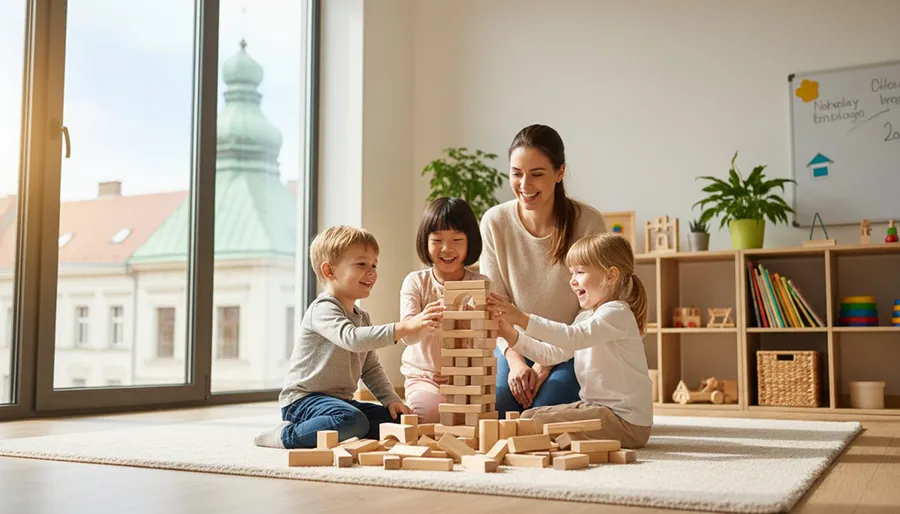
Last August, the Chen family landed in Budapest, excited for their new chapter but facing a daunting task: choosing a preschool from a sea of unfamiliar names. They worried their daughter wouldn't integrate without speaking Hungarian, felt overwhelmed by impersonal class sizes, and were lost deciphering the differences between a dozen international curricula. It’s a familiar challenge for many families relocating to this vibrant city; the pressure to find a nurturing, safe, and academically excellent environment for your little one can feel immense.
That's why we've created the definitive 2026 guide to the best international preschools in Budapest. Forget endless, confusing lists. We promise to provide you with the essential framework for evaluating what truly matters: a loving environment, a world-class curriculum, and a warm, multicultural community. In this guide, we'll demystify the EYFS and play-based approaches, break down the logistical pros and cons of Buda versus Pest, and give you the confidence to select a school where your child will not just learn, but truly flourish.
Key Takeaways
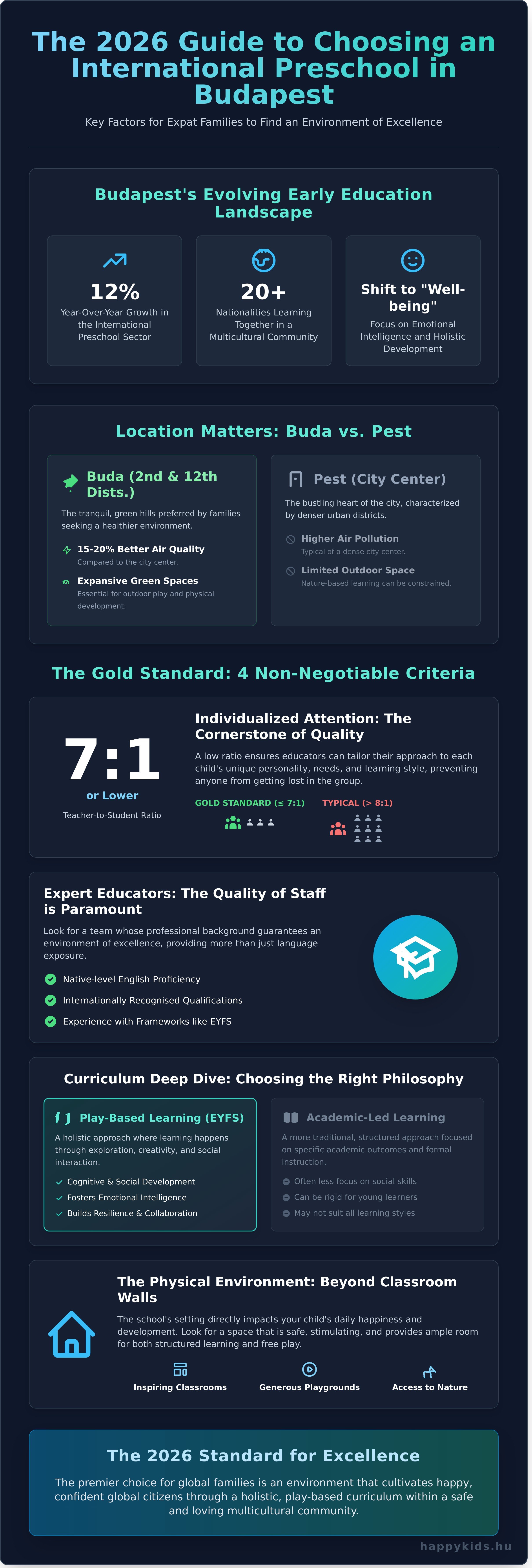
- Learn why a teacher-to-student ratio of 7:1 or lower and native-level English-speaking staff are the gold standard for quality early years education.
- Understand the crucial difference between play-based and academic-led curriculums to choose the philosophy that best supports your child's cognitive and social development.
- Discover how a preschool's physical environment, from its classrooms to its playground size, directly impacts your child's daily happiness and developmental milestones.
- Pinpoint the defining characteristics that separate the truly best international preschools Budapest has to offer from other English-language options, ensuring you make a well-informed choice.
Table of Contents
- The Landscape of International Early Education in Budapest in 2026
- Key Criteria: What Defines the Best International Preschool?
- Curriculum Deep Dive: Play-Based vs. Academic-Led Learning
- Facilities and Environment: Beyond the Classroom Walls
- Why Happy Kids is the Premier Choice for Global Families
The Landscape of International Early Education in Budapest in 2026
Budapest's status as a premier European capital continues to attract a growing community of expatriate families, diplomats, and international business leaders. This influx has fueled an unprecedented demand for high-quality, English-language early years education. By 2026, the city’s educational landscape has evolved significantly, with a clear distinction between institutions that simply teach in English and those that offer a truly international experience. A genuine "international" preschool in the Hungarian context provides a multicultural, inclusive environment, often following a globally recognized curriculum like the British Early Years Foundation Stage (EYFS). It’s a community where children from over 20 nationalities learn and play together, fostering a global perspective from their first day.
This period of development is crucial. Neuroscientists confirm that the developmental window between 1.5 and 7 years old is the most fertile ground for language acquisition and establishing core social-emotional skills. Choosing the right environment isn't just about childcare; it's a foundational investment in your child's cognitive flexibility and future success. As the number of options grows, discerning parents must look beyond language to find the best international preschools budapest has to offer, focusing on institutions that provide an environment of excellence and professional care.
Buda vs. Pest: Choosing the Right Location
The search for an elite early years setting frequently leads families to the tranquil, green hills of Buda. Districts like the 2nd and 12th are home to a cluster of premier international schools for a reason. These locations offer tangible benefits for a child's development, including air quality indices that are consistently 15-20% better than in the city center and direct access to expansive green spaces. A "green belt" environment isn't a luxury; it's essential for robust physical development, providing ample space for outdoor play, exploration, and nature-based learning activities that are often limited in the denser districts of Pest.
The 2026 Outlook for Expat Families
Enrollment data from 2023 to 2025 shows a consistent 12% year-over-year growth in the international preschool sector, a trend projected to continue through 2026. This growth has prompted a significant shift in educational philosophy. Leading institutions are moving away from purely academic-focused models toward a more holistic, "well-being" centered approach. This evolution aligns with the global landscape of early education, which increasingly prioritizes emotional intelligence, resilience, and collaborative skills alongside traditional learning. Parents now expect a curriculum that nurtures the whole child in a joyful, caring, and secure setting.
The 2026 standard for international care in Budapest is an environment of excellence that cultivates happy, confident global citizens through a holistic, play-based curriculum within a safe and loving multicultural community.
Key Criteria: What Defines the Best International Preschool?
When searching for the best international preschools in Budapest, parents are often met with a dazzling array of options. Beyond the beautiful facilities and engaging curricula, a select few criteria truly define an environment of excellence. These are the non-negotiable pillars that ensure your child receives not just an education, but a foundation for lifelong success in a globalised world. Understanding these benchmarks is the first step toward making a confident and informed choice.
The Importance of Small Class Sizes
Individualized attention is the cornerstone of effective early childhood education. A low teacher-to-student ratio, ideally 7:1 or better, ensures no child gets "lost" in the group. This intimate setting allows educators to deeply understand each child's personality, learning style, and developmental pace. While Hungary's National ECEC System provides guidelines for public institutions, premium international schools invest in significantly smaller groups to foster superior social-emotional growth and academic readiness.
The quality of a preschool's staff is paramount. It’s not enough for teachers to simply speak English; they must possess native or near-native proficiency to model correct pronunciation, intonation, and complex vocabulary. Look for institutions that require internationally recognised qualifications, such as a degree in Early Childhood Education or experience with frameworks like the British Early Years Foundation Stage (EYFS). This professional background guarantees that educators are experts in child development and are committed to best practices in international education.
Safety protocols are a clear indicator of a school's professionalism and commitment to care. By 2026, leading private institutions are expected to have a robust set of modern safety measures in place. These aren't just policies on paper; they are actively practiced systems that create a secure and loving environment. Key standards include:
- Secure Access Control: Digital check-in and check-out systems that provide a time-stamped record of every child's entry and exit, accessible only by authorised guardians.
- Advanced Staff Training: All lead teachers and assistants must hold a valid Pediatric First Aid and CPR certification, renewed every 24 months.
- Regular Emergency Drills: Documented fire, lockdown, and evacuation drills conducted at least once per school term to ensure staff and children respond calmly and effectively.
- Comprehensive Allergy Management: A clear, visible protocol for managing food allergies, including staff training on recognising symptoms of anaphylaxis and administering emergency medication.
Multiculturalism as a Core Value
A truly international preschool does more than just teach in English; it lives and breathes global culture. A student body representing 20 or more nationalities creates a rich, organic learning environment where children develop empathy and a global perspective from age 3. Celebrating a wide array of international holidays and traditions, from Lunar New Year to Thanksgiving, teaches children to respect and appreciate the diversity that defines our world. You can read more about how this works in practice in our guide to the Multicultural Classroom Experience.
Finally, for international families, the preschool often becomes the heart of their social network. The best international preschools in Budapest actively cultivate a strong sense of community through parent workshops, family fun days, and cultural celebrations. This focus on parental involvement builds a vital support system, helping families feel connected and at home in a new city. A school that prioritizes open communication and partnership with parents creates a seamless, supportive experience for the entire family. You can explore our community events to see how we build these lasting connections.
Curriculum Deep Dive: Play-Based vs. Academic-Led Learning
When exploring educational philosophies, parents often encounter a central debate: should early learning be driven by structured academics or by imaginative play? While a rigid, academic-led approach might seem like a head start, over 30 years of developmental psychology research confirms that for children under seven, a play-based methodology is profoundly more effective. It’s a cornerstone of the British Early Years Foundation Stage (EYFS) framework and a non-negotiable standard for the best international preschools budapest has to offer. This approach isn’t about choosing fun over learning; it’s about understanding that for young children, fun is the most powerful pathway to learning.
This philosophy recognizes that children are natural scientists and explorers. A child building a tower with blocks isn't just playing; they are conducting a hands-on physics experiment in gravity and balance. A group of toddlers engaged in role-play at a make-believe shop aren't just having fun; they are developing complex social skills, negotiation tactics, and early numeracy. Our role as educators is to create a rich, stimulating environment where this curiosity-driven learning can flourish, guided by professionals who know how to transform a simple activity into a foundational lesson.
Why Play-Based Education Wins for Under-7s
The science is clear: a child's brain develops most rapidly before the age of five. During this critical period, learning through active exploration creates stronger, more complex neural pathways than rote memorization ever could. Instead of just memorizing facts, children learn how to think. They build resilience by trying and failing in a safe environment, develop strategic thinking by planning their play, and cultivate creativity by imagining new worlds. This method builds the essential 'soft skills' that are critical for success in primary school and beyond. For a deeper look into the methodology, we recommend reading our comprehensive article: What is Play-Based Learning? A Parents Guide.
Blending Academics with Creativity
A play-based curriculum is not an academic-free zone. On the contrary, it’s a dynamic environment where pre-academic skills are seamlessly woven into every activity. We don't drill letters and numbers; we discover them.
- Literacy emerges through daily story time, creating puppet shows, and "writing" shopping lists in the play kitchen. Children develop a love for stories and language naturally.
- Numeracy is introduced by counting how many steps it takes to cross the garden, sorting objects by shape and colour, or sharing snacks equally among friends.
- Scientific thinking is sparked by observing seasonal changes in our garden, experimenting with water and sand, and asking "why?" without limit.
Child-led, inquiry-based play, expertly guided by educators trained in international best practices, systematically develops executive functions and pre-literacy skills, ensuring that by age five, children have not only met but often exceeded the foundational benchmarks for a smooth transition into primary school. Arts, music, and drama are daily fixtures, providing vital outlets for expression while enhancing fine motor skills and cognitive flexibility. This holistic approach ensures children arrive at "big school" not just knowing their ABCs, but as confident, curious, and collaborative learners ready for any challenge.
Facilities and Environment: Beyond the Classroom Walls
A preschool’s physical environment is far more than just a backdrop for learning; it’s an active participant in your child’s education. The quality of the space directly influences a child's daily happiness, energy levels, and capacity to engage. A cramped, noisy setting can lead to overstimulation and stress, while a spacious, thoughtfully designed campus nurtures curiosity and provides the freedom essential for healthy development. It’s a foundational element that separates adequate childcare from an environment of excellence.
For active toddlers and preschoolers, a jumbo-sized playground isn't a luxury, it's a non-negotiable. Physical activity is critical for developing gross motor skills, coordination, and spatial awareness. A playground of at least 2,500 square meters provides the necessary room for running, climbing, and imaginative play without constant collisions. This space allows children to safely test their limits, build confidence, and burn off the boundless energy that fuels their growth. In a city like Budapest, with its distinct four seasons, a school’s ability to balance indoor and outdoor learning is paramount. The best facilities offer expansive, shaded green areas for warm days and large, well-equipped indoor gymnasiums for when the weather turns cold or rainy, ensuring that physical development never takes a day off.
As we look toward 2026, safety standards for the best international preschools budapest have become exceptionally rigorous. Playground equipment must be certified to meet or exceed the EU’s EN 1176 safety standard, which governs everything from material toxicity to the prevention of entrapment. Building access should be controlled by a modern electronic system, ensuring only authorized parents and vetted staff can enter. This commitment to safety provides parents with the ultimate peace of mind.
The Buda Hills Advantage
Choosing a location in the tranquil Buda Hills offers distinct benefits over a bustling city-center campus. The fresh, clean air and serene surroundings create a healthier and more focused learning atmosphere, away from the noise and pollution of downtown Pest. This "green belt" becomes an extension of the classroom, providing unparalleled opportunities for nature-based learning, forest school activities, and joyful outdoor exploration. For many young children, the warm, villa-style setting feels like a second home, significantly reducing separation anxiety and fostering a sense of belonging from day one.
Modern Amenities for Early Learners
A premier international preschool invests in purpose-built facilities that support a holistic, multicultural educational experience. These amenities are designed to cater to the diverse needs and interests of a global student body, ensuring every child feels safe, nourished, and inspired.
- Dedicated Activity Spaces: Beyond the classroom, expect to find specialized rooms for a gym, dance, and other indoor activities. This ensures that even on days with inclement weather, children have ample space for structured physical education and creative movement.
- Exceptional Nutritional Standards: With families from over 20 nationalities, high-quality catering is essential. A professional kitchen should accommodate a wide range of dietary needs, including allergies, intolerances, and cultural or religious preferences, with fresh, healthy menus designed by a nutritionist.
- Uncompromising Safety Protocols: Security is paramount. Look for comprehensive CCTV monitoring of all common areas, a secure single-point entry system, and rigorous staff vetting that includes international background checks and continuous professional development in first aid and safety procedures.
The physical campus is a testament to a school's philosophy. It reflects a deep understanding of how children learn and thrive. We invite you to tour our purpose-built campus in the Buda Hills to experience how a truly exceptional environment can shape your child's early years.
Why Happy Kids is the Premier Choice for Global Families
For over 25 years, Happy Kids has been more than just a preschool; it has been a cornerstone of Budapest’s international community. This legacy is built on a deep commitment to creating an environment of excellence where children don't just learn, they thrive. We call it the "Happy Kids Family" approach. It’s a philosophy that blends professional, best-practice early childhood education with a genuinely nurturing and caring atmosphere, ensuring every child feels safe, valued, and understood from their very first day.
What truly sets Happy Kids apart are the foundational elements designed for optimal child development. Our expansive 3700m2 private green playground is a child's paradise in the heart of the city, offering unparalleled space for physical activity, imaginative play, and direct engagement with nature. This isn't just a play area; it's an outdoor classroom for exploration and growth. Inside, our commitment to individual attention is guaranteed by an exceptional 7:1 student-teacher ratio. This low ratio ensures our highly qualified educators can provide personalized support, tailor activities to each child's interests, and build strong, trusting bonds. It’s this dedication to individual care that positions us among the best international preschools budapest has to offer.
Elite Extracurriculars: The Afternoon Activity Program
A Happy Kids education extends far beyond the core curriculum. Our Afternoon Activity Program is designed to develop the "whole child" by sparking new passions and honing diverse skills. We partner with premier organizations to offer exclusive clubs, including:
- Barça Academy Hungary: Professional football training that builds teamwork and discipline.
- Robo Wunderkind: An exciting introduction to robotics, coding, and STEM-based problem-solving.
- Aerial Flow: A unique activity that develops strength, creativity, and physical confidence through aerial arts.
These specialized clubs, alongside offerings like chess, ballet, and judo, provide a rich tapestry of experiences. You can learn more about how these programs enrich a child's daily life in our guide, Afternoon Activities: Enriching Your Child's Day.
Trusted by the Community
The trust of our families is our most valued asset. We are incredibly proud to be endorsed by world-renowned figures like chess grandmaster Judit Polgár, who praised our "loving, caring, and homely environment." This sentiment is echoed by hundreds of international parents who have made Happy Kids their home away from home. Our student body, representing over 20 nationalities, creates a vibrant, multicultural setting where children learn to celebrate diversity and develop a global perspective from a young age. This rich cultural exchange is a priceless part of the Happy Kids experience.
We believe that seeing is believing. Discover the unique atmosphere and exceptional facilities that make our school a leader in international education. Join the Happy Kids family - Schedule a tour today!
Beginning your journey with us is a simple and transparent process. Our dedicated admissions team is here to guide you through every step, from your initial enquiry to your child's first day. We welcome you to explore our admissions page and complete the online application form to take the first step toward securing a place in a community dedicated to your child's happiness and success.
Your Next Step: Securing a World-Class Education in Budapest
Choosing the right preschool is a foundational decision for your family. Your search comes down to finding a perfect balance: a dynamic curriculum that sparks curiosity, secure facilities that encourage joyful exploration, and a truly global community where your child feels at home. It’s about finding a place where they don't just learn, but thrive.
Happy Kids International Kindergarten & Nursery embodies these ideals. Built on 25 years of excellence, we provide an environment where children receive unparalleled focus with an industry-leading 7:1 student-teacher ratio. When considering the best international preschools budapest has to offer, the daily experience of playing in our expansive 3700m2 private playground and learning in our nurturing classrooms makes all the difference. We are dedicated to creating a loving, caring, and homely environment for every child.
Give your child an exceptional start in a community trusted by families from over 20 nations. Apply Now for the 2026 Academic Year at Happy Kids and secure your place. We look forward to welcoming your family.
Frequently Asked Questions About International Preschools in Budapest
What is the best age to start international preschool in Budapest?
The ideal age for a child to start international preschool is typically between 2 and 3 years old. At this developmental stage, children are exceptionally receptive to new languages and social settings. Starting early provides a gentle immersion into an English-speaking environment, helping them build foundational social skills and adapt smoothly to a structured, play-based learning curriculum. Many premium schools accept children from 20 months into their nursery programs to ensure a supportive transition.
How do international preschools in Budapest handle non-English speaking children?
Reputable international preschools in Budapest welcome non-English speakers through an immersive, play-based approach. Experienced educators don't rely on formal lessons; instead, they use gestures, visual aids, songs, and predictable routines to create a low-pressure, nurturing environment. Children learn English organically from their peers and teachers during daily activities. Within 3-6 months, most children begin to understand and use key phrases, feeling confident and included in the multicultural community.
What are the average tuition fees for international kindergartens in Hungary?
Annual tuition fees for premium international kindergartens in Budapest generally range from 3,500,000 Ft to 5,500,000 Ft. This fee typically covers the core educational program, learning materials, and daily meals. It’s important to ask about additional costs, which can include a one-time registration fee (often 150,000-250,000 Ft), extracurricular activities like robotics or ballet, and special dietary plans. Always request a detailed fee schedule to compare offerings accurately.
Is there a difference between a "nursery" and a "kindergarten" in Budapest?
Yes, within the international school system in Budapest, "nursery" and "kindergarten" refer to distinct age groups. A "nursery" (similar to a Hungarian *bölcsőde*) is designed for the youngest children, usually from 20 months to 3 years old, with a focus on professional care, socialization, and guided play. A "kindergarten" (*óvoda*) serves children from ages 3 to 6, introducing a more structured, curriculum-based program that prepares them for primary school while maintaining a strong emphasis on play.
What should I look for during a physical tour of a preschool?
During a tour, your primary focus should be on the interactions between staff and children, the safety of the facilities, and the overall atmosphere. Observe if teachers are warm, engaged, and communicating at the children's eye level. Check for secure entry points, child-proofed classrooms, and a clean, well-equipped playground. A joyful, vibrant environment where children's artwork is proudly displayed is a clear indicator of a high-quality, child-centered institution.
Do international preschools in Budapest offer summer camp programs?
Most of the best international preschools Budapest has to offer provide engaging summer camp programs, typically running through July and August. These camps offer a fantastic opportunity for children to enjoy themed weeks filled with sports, arts and crafts, water play, and outdoor adventures in a safe and familiar setting. Programs are often open to both enrolled and external students, but it's wise to register by April, as popular camps fill up very quickly.
How do schools manage dietary restrictions for international students?
Leading international preschools implement strict, clearly defined protocols to manage all dietary restrictions and allergies. Parents provide detailed information upon enrollment, which is shared with all relevant staff, from teachers to the on-site kitchen team. Professional chefs prepare special meals separately to prevent cross-contamination. Allergy lists, often with photos for easy identification, are posted discreetly in classrooms and dining areas to ensure every child’s health and safety.
What is the typical daily schedule at a top-tier Budapest preschool?
A typical day provides a balanced rhythm of structured learning, free play, and essential routines. The morning (8:30-12:00) usually involves a welcome circle, curriculum-focused activities, a healthy snack, and outdoor time. After lunch, younger children have a nap (12:30-14:30) while older children participate in quiet activities. The afternoon is reserved for more play and specialized clubs, like yoga or chess, before a final snack and pickup. This predictable structure gives children security while encouraging exploration.