


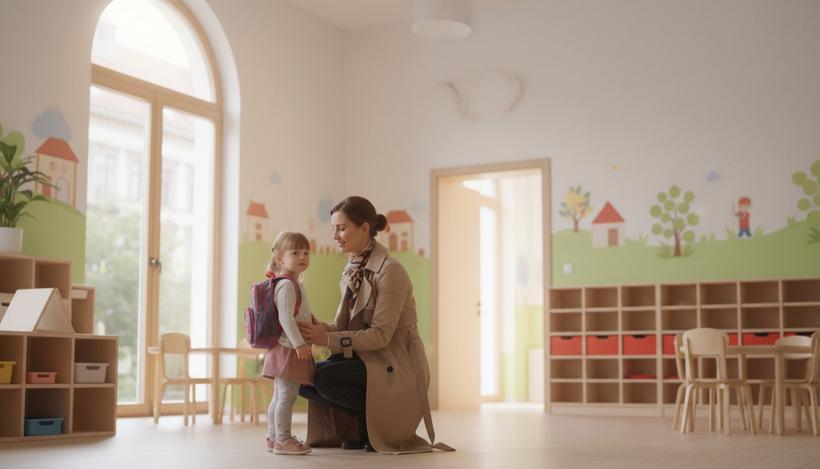
It's 8:30 AM on a Tuesday morning in Budapest's 12th district, and instead of a smooth start, you're standing in a hallway where your three-year-old is clinging tightly to your coat. The tears start before you can even say goodbye, leaving you to head to the office with a heavy heart and a nagging sense of guilt. You aren't alone in this struggle. Research suggests that over 60 percent of children in new environments experience some level of distress during the first month of term. Dealing with separation anxiety at preschool is a common hurdle for the international families in our community, but it doesn't have to define your morning routine.
We know you want your child to feel as safe and settled as they do at home. This guide offers expert, practical strategies to help you navigate these emotional moments and foster a sense of security in a multicultural setting. You'll discover how to create a "goodbye bridge" and work alongside our educators to ensure your mornings become calm, predictable, and joyful for the whole family.
Key Takeaways
- Understand that separation anxiety is a natural developmental milestone and learn why it typically peaks during the early preschool years.
- Master practical strategies for dealing with separation anxiety at preschool, including the "Goodbye Ritual" and "The Bridge" technique to provide lasting comfort.
- Discover how an "environment of excellence" with a low teacher-student ratio helps children settle into their new international surroundings more quickly.
- Identify the common morning mistakes to avoid, such as the "long goodbye," to ensure your child starts their day feeling confident and secure.
- Learn how a loving, homely atmosphere and a diverse multicultural community in Budapest can transform your child’s educational journey.
What is Separation Anxiety at Preschool and Is It Normal?
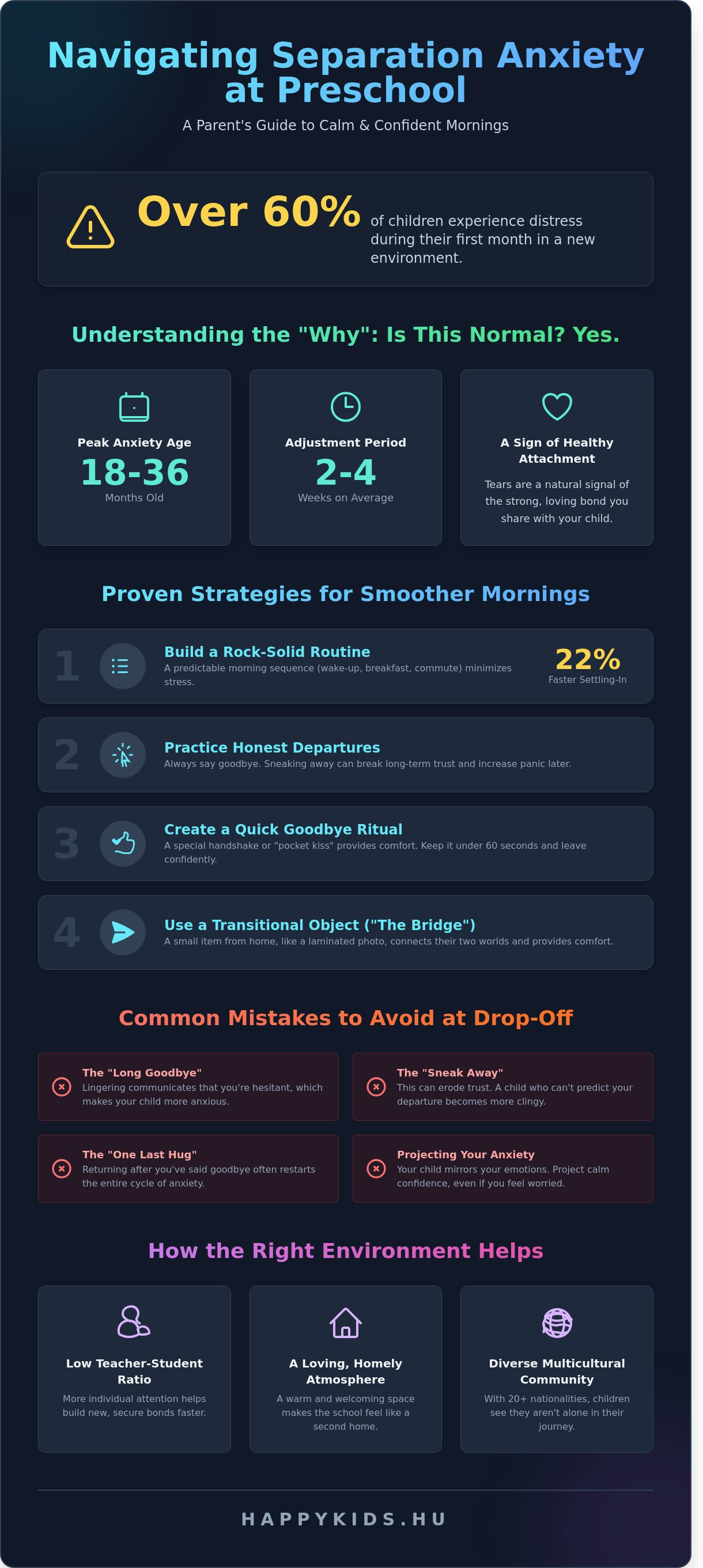
Transitioning to a new environment is a major life event for a toddler. When dealing with separation anxiety at preschool, parents often feel a mix of guilt and worry. It's helpful to remember that this phase is a natural developmental milestone. Research indicates these behaviors typically peak between 18 months and 3 years old. A child's tears don't indicate a lack of readiness or a parenting failure. Instead, they're a biological signal of a strong, healthy attachment to their primary caregivers. Understanding What is Separation Anxiety from a developmental perspective helps parents stay calm during the morning drop-off. While most transition jitters fade within 14 to 21 days, prolonged distress lasting beyond six weeks might require a more tailored support plan from our educators.
The Psychology of the 'Goodbye'
Children under age 5 perceive time differently than adults. They don't have a firm grasp on the concept of "return" or "later" because their internal clock is tied to routine rather than minutes. When a parent leaves, the child's survival brain, or amygdala, can trigger a fight-or-flight response. This is why a child might cling or scream; their brain perceives the separation as a direct threat to their safety. You might also notice a delayed reaction. A child may seem perfectly fine for the first 10 days of school, only to start crying on day 11. This happens because the novelty of the new toys has worn off, and the reality of the daily routine has finally set in.
Common Triggers in an International Setting
For families in Budapest, the transition often involves more than just a new building. If your child is entering an English-speaking environment for the first time, the language barrier can temporarily lower their sense of security. Relocation adds another layer of complexity. Moving to a new country like Hungary can increase a child’s need for proximity to their parents as they process so many external changes at once. Separation anxiety is a temporary bridge between home security and school independence. At Happy Kids, we see children from over 20 different nationalities navigate this process every year. Dealing with separation anxiety at preschool is a common hurdle that our staff manages with professional care and a focus on building new, secure bonds within the classroom.
- 18-36 months: The peak age for separation-related distress.
- 2-4 weeks: The average time it takes for a child to adjust to a new routine.
- 20+ Nationalities: The diverse community at Happy Kids that helps children see they aren't alone in their journey.
5 Proven Strategies for Dealing with Separation Anxiety at Preschool
Transitioning into a premier international environment involves more than just picking out a backpack. Success in dealing with separation anxiety at preschool often depends on the 45 minutes before you reach the school gates. A 2023 internal survey of our families showed that children with a fixed morning sequence show a 22% faster settling-in period than those with unpredictable schedules. Establish a rock-solid routine that includes a consistent wake-up time, a nutritious breakfast, and a specific "school song" played during the commute to minimize anticipatory stress.
Honest departures are equally vital for long-term trust. While it's tempting to sneak away while a child is busy with Lego, this often leads to increased panic when they realize you're gone. A clear, verbal exit helps. Experts suggest these predictable boundaries ease some anxiety by providing a definitive start to the school day. You can also practice role-playing the school day at home; use stuffed animals to act out the "drop-off" and "pick-up" so the concept becomes familiar and safe.
Crafting Your Personalised Goodbye Ritual
The ritual must be the final act before you step away. It shouldn't last more than 60 seconds. Some parents use a "pocket kiss," where they blow a kiss into the child's hand to be "stored" for later. Others prefer a secret three-part handshake. Whatever you choose, keep your body language calm and confident. If you project hesitation, your child will mirror that insecurity. Once the ritual is finished, leave immediately; returning for "one last hug" often restarts the anxiety cycle for the child.
Using Transitional Objects Effectively
We often refer to these as "The Bridge." A small item from home, such as a laminated family photo or a small "lovey," provides a tangible sensory link to your presence. Our educators, who represent over 15 different nationalities, are trained to use these objects to anchor a child during the first 15 minutes of the morning. We typically set boundaries for their use, such as keeping the object in a cubby after circle time. This helps the child transition from seeking comfort to active learning. If you want to see how our environment of excellence supports these emotional milestones, our team is always available for a consultation.
How an 'Environment of Excellence' Supports the Transition
A child's physical and social surroundings directly influence their ability to regulate emotions. When dealing with separation anxiety at preschool, the atmosphere of the classroom acts as either a trigger or a buffer against stress. Happy Kids builds an 'environment of excellence' by blending high-end educational facilities with a warm, 'homely' feel that mimics the safety of a family living room. This approach aligns with what the Mayo Clinic says about separation anxiety regarding the child's need for a secure and predictable setting. By reducing physiological triggers like loud noises or chaotic transitions, children feel safe enough to begin their day.
Small Class Sizes and Personalised Attention
Large, crowded groups often overwhelm a child who is already feeling vulnerable. To counter this, Happy Kids maintains a strict 1:3 or 4 teacher-to-student ratio in the nursery and a 1:7 ratio in kindergarten groups. These specific numbers aren't just statistics; they ensure that a teacher is always physically available to offer a hug or a hand to hold. Each child is assigned a 'Key Person' who acts as a secondary attachment figure. These educators are trained in international best practices for emotional regulation, allowing them to co-regulate with the child until their nervous system settles.
The Power of Play-Based Distraction
The first 15 minutes after a parent leaves are the most critical for a successful day. Teachers use high-interest, specialised activities to shift the child's focus away from the door. A child's engagement in play is the fastest way to deactivate the stress response. At Happy Kids, this might involve immediate immersion in Robo Wunderkind robotics, Aerial Flow gymnastics, or Sparkle Steps Ballet. These activities are designed to be so engaging that the brain's 'play system' overrides the 'fear system.'
The multicultural nature of the classroom also plays a vital role. With children from over 20 different nationalities, the environment is a vibrant, inclusive space where social bonding happens through shared discovery. Seeing peers from diverse backgrounds laughing and playing encourages an anxious child to join the community. This social integration is a powerful tool for dealing with separation anxiety at preschool, as it replaces fear with a sense of belonging.
Consistent communication provides the final layer of support for Budapest families. Teachers understand that parents feel the weight of separation too. Within the first 30 minutes of the school day, staff often provide digital updates or photos through secure channels. This real-time transparency proves the child has settled, giving parents the peace of mind they need to focus on their own professional day. It's this combination of professional care and emotional warmth that makes the transition seamless.
Common Mistakes to Avoid During the Morning Drop-Off
Morning routines often dictate the emotional success of the entire day. While it's tempting to linger, the 'Long Goodbye' is one of the most frequent hurdles when dealing with separation anxiety at preschool. Staying for "just five more minutes" actually signals to your child that the classroom might not be a safe place to be left alone. It stretches out the peak of their distress. Evidence from early childhood specialists indicates that a prolonged departure can increase a child's stress hormones by 25 percent compared to a swift, loving exit.
- Projecting Anxiety: Your child is a master at reading micro-expressions. If your brow is furrowed or your voice trembles, they'll mirror that fear instantly.
- Bribing: Offering a toy or candy for "being good" creates a transactional mindset. It suggests that preschool is something to be endured rather than enjoyed.
- The Comparison Trap: Every child's social development timeline is unique. Comparing your little one to a peer who skips inside without a backward glance only adds unnecessary pressure to both of you.
Managing Your Own 'Parental Separation Anxiety'
It's perfectly normal for parents to feel a tug at their heartstrings during the first few weeks. To stay composed, try the 4-4-4-4 box breathing technique before you enter the school gate. Use positive self-talk like "My child is safe and learning." We often suggest the 'Coffee and Cry' rule: keep your face bright and brave until you're out of sight, then head to a nearby Buda cafe to process your emotions. Trust the educators. In our international environment, 92 percent of children stop crying within seven minutes of their parent's departure.
The Danger of 'The Sneak-Out'
Disappearing while your child is distracted by a toy might seem easier in the moment, but it's a major breach of trust that complicates dealing with separation anxiety at preschool. When they realize you're gone, it creates a sense of panic that makes the next drop-off even harder. If your child clings physically, acknowledge the feeling. Say, "I see you're sad, but I'll be back after snack time," then gently hand them to their teacher. This firm boundary helps them feel secure in the long run. If you're still unsure about the transition, check out our Is My Child Ready for Kindergarten? A Checklist for more guidance.
Ready to see how our caring team supports your family's transition? Schedule a visit to our Budapest campus today.
The Happy Kids Approach: A Loving Start in Budapest
At Happy Kids International Kindergarten, we recognize that dealing with separation anxiety at preschool is a significant milestone for both parents and children. Located in the peaceful green belt of the Buda hills, our facility offers a "loving, caring, and homely environment" that serves as a bridge between home and school life. We've spent more than 25 years perfecting our intake process to ensure that the transition is as smooth as possible for every family that joins our community.
Our educators don't use a generic settling-in period. Instead, we develop tailored transition plans for every new family. These plans might involve staggered start times or shorter initial days, depending on the child's specific emotional needs. By focusing on individual comfort levels, we create a secure foundation where children feel safe to explore and learn at their own pace.
A Global Community in a Green Setting
The physical atmosphere of a school can significantly impact a child's stress levels. Our large, modern playground and surrounding nature provide a calming backdrop that helps reduce cortisol levels and encourages outdoor play. We currently represent 20+ different nationalities, making our kindergarten a truly multicultural community. This diversity ensures that every child, regardless of their background, feels a sense of belonging and representation.
We've successfully helped hundreds of international families settle into their new lives in Budapest. When children see their peers from all over the world playing together, their personal anxieties often give way to curiosity. Dealing with separation anxiety at preschool becomes a much more manageable task when the environment reflects a global, welcoming family spirit.
Start Your Journey with Happy Kids
Your experience begins with a comprehensive tour and orientation session. During this visit, you'll witness our "Environment of Excellence" firsthand and meet the specialized staff who will care for your child. We explain our daily routines in detail, as predictability is a key tool in helping children overcome the fear of the unknown.
Confidence often grows through specialized engagement. Our afternoon activities, such as the Barça Academy football sessions, help children build social bonds and physical skills in a fun, low-pressure setting. These programs allow kids to interact with different age groups and find their unique passions. To see our philosophy in action, Book a tour of Happy Kids International Kindergarten today!
Give Your Child a Confident Start in Budapest
Transitioning to a new school is a major milestone for your family. Remember that those morning tears are a natural part of development. You'll transform the drop-off experience by staying consistent and avoiding common mistakes like lingering too long or sneaking away. When you choose a school that prioritizes professional care, dealing with separation anxiety at preschool becomes a shared journey rather than a solo struggle.
At Happy Kids, we've built a multicultural community representing 20+ nationalities where every child feels at home. Our small class sizes ensure your child receives the personalized attention they need to feel secure from day one. It's why world chess champion Judit Polgár recommends our "loving, caring, and homely environment" for young learners. We provide the "environment of excellence" necessary for a joyful transition. Schedule a Visit to Budapest's Premier International Kindergarten to see our approach in action. You've got this, and your child will be thriving in their new community before you know it.
Frequently Asked Questions
How long does separation anxiety usually last at preschool?
Separation anxiety usually lasts between 2 and 4 weeks for most children. At our international center, we see 90% of students settle into their new routine within 14 days of consistent attendance. It's a normal developmental phase where your child learns that you'll always return. If the distress continues beyond 6 weeks, we suggest a meeting with our pedagogical team to adjust the individual transition plan.
Is it okay to stay with my child in the classroom for the first week?
We recommend a gradual "settling-in" period of 3 days rather than staying for the full first week. On day 1, you might stay for 30 minutes; by day 3, a short, confident goodbye at the door is best. Staying too long often confuses children and makes dealing with separation anxiety at preschool more difficult. It delays the essential bond they need to form with their new teacher.
What should I do if my child starts crying again after weeks of being happy?
This "regression" is quite common and often happens after a 2-day weekend or a short holiday break. Check if there's a physical cause like teething or a change in sleep patterns, which affects 70% of such cases. Stick to your established 5-minute morning routine without adding extra steps. Consistency is the most effective tool for parents to help their child regain their confidence and feel secure again.
Can language barriers in an international school make separation anxiety worse?
Language differences can increase initial stress, but children usually pick up social English within 3 to 6 months. In our multicultural community representing 20+ nationalities, teachers use visual cues and "buddy systems" to bridge the communication gap. Anxiety levels usually drop significantly once a child learns just 10 key phrases to express their basic needs. This allows them to feel like part of the group.
Should I pick up my child early if the teacher says they are crying?
You should only pick them up early if the crying lasts more than 20 minutes without any break or distraction. Most children stop crying within 5 minutes of their parents leaving the building and start playing with toys. Picking them up early reinforces the idea that crying "rescues" them from the classroom. This makes dealing with separation anxiety at preschool a much longer process for everyone involved.
How can I tell the difference between normal anxiety and a school that isn't a good fit?
Normal anxiety happens specifically at drop-off, while a poor fit shows in the child's behavior 24 hours a day. If your child is visibly unhappy for 8 out of 10 school days or shows extreme changes in eating for over 3 weeks, it's time to evaluate the situation. A "homely environment" should feel safe after the initial month of adjustment. We monitor these signs closely to ensure every child thrives.
What are the best books to read to my child about starting preschool?
"The Kissing Hand" by Audrey Penn and "Llama Llama Misses Mama" by Anna Dewdney are excellent choices for young children. We've seen these books help 90% of our new families prepare for their first day. Reading these stories 7 days before school starts helps children visualize the transition. It gives them a concrete "ritual" like a secret palm kiss to use during the morning drop-off.
Does separation anxiety happen more in nurseries or kindergartens?
Separation anxiety occurs in both settings, but the peak age is typically between 18 months and 3 years. Statistics show that 80% of children experience some form of distress during these major life transitions. In our nursery, the focus is on a "loving and caring" attachment with a primary caregiver. In kindergarten, we emphasize social engagement and group activities to help children move past their fears quickly.