


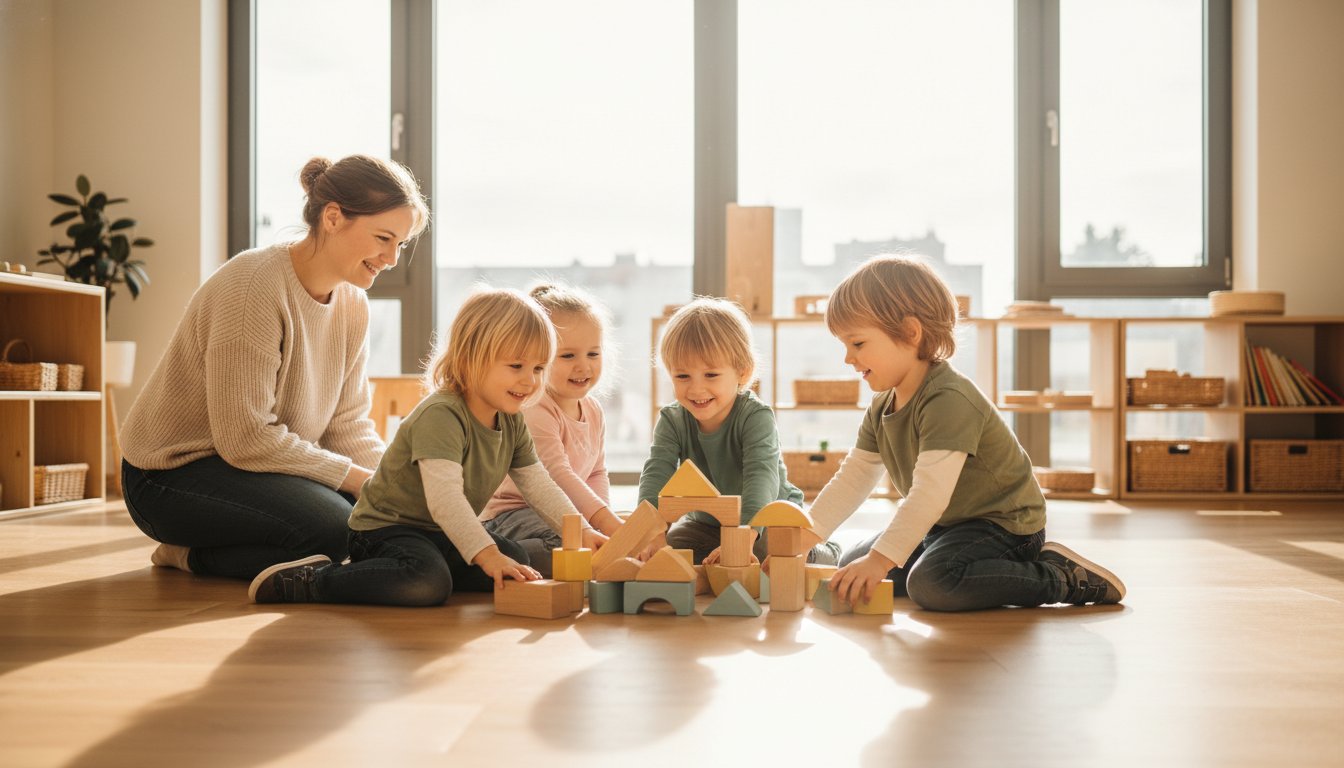
As you stand at the threshold of your child's educational journey, the world of pre-school education can seem like a complex puzzle. Is it simply a place for supervised play, or is it the foundational first step towards academic success? For many parents, the confusion between different philosophies, the distinction between nursery and kindergarten, and the anxiety about their child's social and emotional readiness can be overwhelming.
This comprehensive guide is crafted to bring clarity and confidence to this pivotal decision. We will demystify the profound impact of high-quality early learning, exploring how a nurturing environment transforms joyful play into the essential skills for life. Prepare to discover the key benefits for your child’s development, gain the tools to evaluate different programmes, and feel empowered to choose a setting where your little one will not just grow, but truly thrive in their first steps towards a lifetime of learning.
Beyond Play: The Core Pillars of Quality Pre-School Education
While it may look like simple fun to an adult, play is the profound and serious work of early childhood. It is the primary language through which children explore, understand, and interact with their world. A high-quality pre-school education programme harnesses this natural impulse, transforming joyful activities into powerful learning opportunities. This approach is built on the principle of holistic development-nurturing the whole child. The objective is not merely to impart academic facts, but to cultivate a deep-seated curiosity and a genuine love for learning that will last a lifetime.
Social and Emotional Development: The Foundation for Success
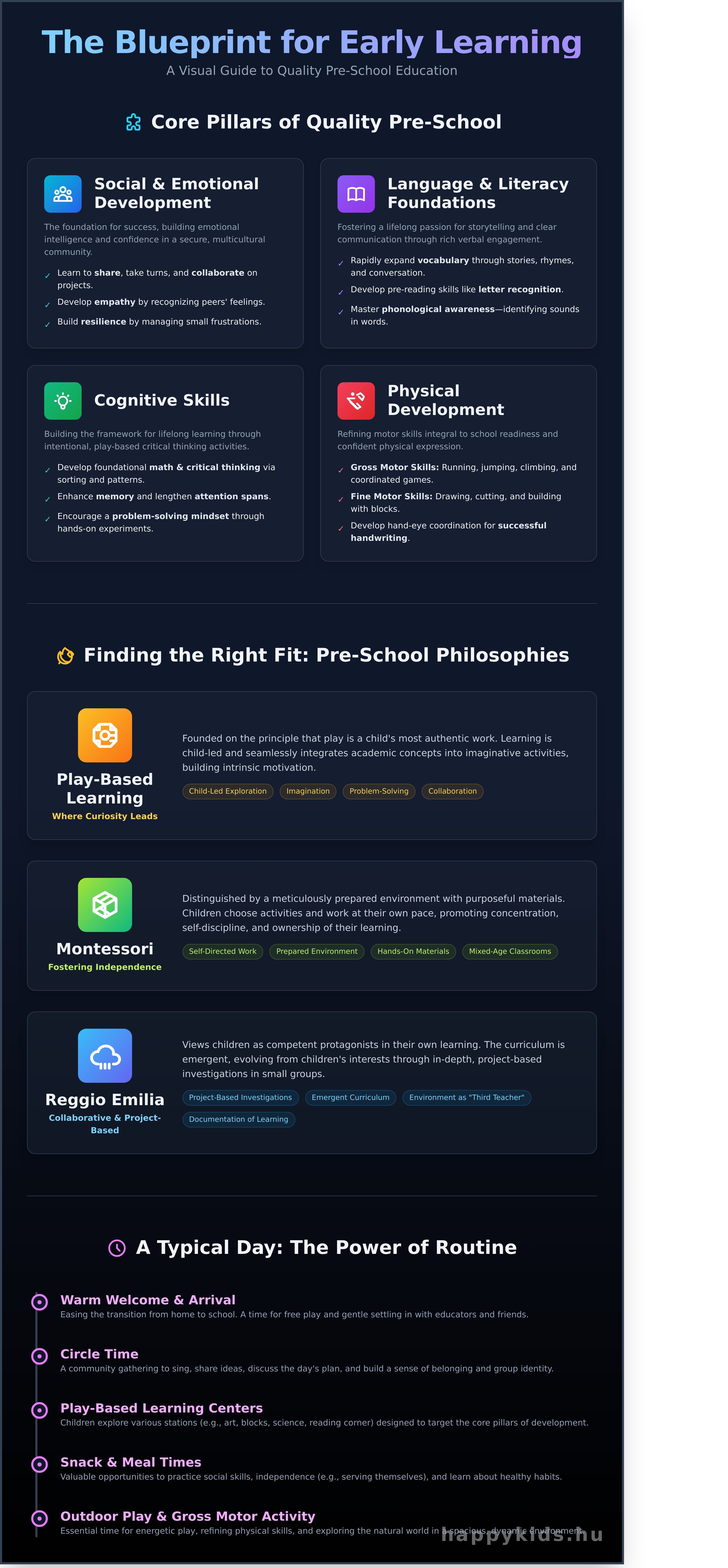
In a nurturing, multicultural group setting, children learn to navigate complex social landscapes. They practise sharing resources, taking turns in games, and collaborating on creative projects. This is where they develop empathy by recognising the feelings of their peers, build resilience by managing small frustrations, and gain the confidence to express themselves as independent thinkers within a secure and caring community. These skills form the bedrock of emotional intelligence and future success.
Language and Literacy Foundations: Preparing for a World of Words
The journey to literacy begins long before a child can read a book alone. Through engaging stories, rhymes, and rich conversations with educators and peers, children rapidly expand their vocabulary. We focus on developing crucial pre-reading skills, such as letter recognition and phonological awareness-the ability to hear and identify different sounds in words. Our goal is to foster a lifelong passion for storytelling and equip children to articulate their own ideas with clarity and confidence.
Cognitive Skills: Building the Framework for Lifelong Learning
Intentional, play-based activities are a powerful tool for building essential cognitive frameworks. By sorting colourful blocks, identifying patterns in music, or engaging in simple, hands-on science experiments, children develop foundational math and critical thinking skills. These joyful experiences are carefully designed to enhance memory, lengthen attention spans, and encourage the problem-solving mindset necessary for all future academic challenges.
Physical Development: Gross and Fine Motor Skills
A child's physical growth is integral to their overall development and school readiness. Our dynamic environment and spacious play areas encourage the refinement of gross motor skills through running, jumping, climbing, and coordinated games. At the same time, activities like drawing, cutting with scissors, and building with intricate blocks develop the fine motor control and hand-eye coordination that are the direct precursors to successful and confident handwriting.
Common Pre-School Philosophies: Finding the Right Fit for Your Child
Selecting the right pre-school is one of the most significant decisions a family can make. The landscape of pre-school education is rich with diverse pedagogical approaches, each offering a unique pathway to learning and development. Navigating the various Common Pre-School Philosophies is the first step toward finding an environment that aligns with your family’s values and your child’s individual personality. While many premier international schools today thoughtfully blend elements from several models, understanding the core principles of these foundational approaches is essential. Ultimately, the most effective methodologies are child-centered, focusing on nurturing curiosity, confidence, and a lifelong love for learning.
Play-Based Learning: Where Curiosity Leads the Way
This philosophy is founded on the principle that play is the most authentic work of a child. In a play-based classroom, learning is child-led and thoughtfully guided by educators. Activities are designed to spark imagination and encourage exploration, fostering critical skills like collaboration, creativity, and complex problem-solving. Academic concepts, such as early literacy and numeracy, are seamlessly integrated into activities like building a block city or running a pretend shop, which builds intrinsic motivation and genuine enthusiasm for discovery.
Montessori: Fostering Independence and Self-Direction
The Montessori method is distinguished by its meticulously prepared environment, where every material is designed for a specific learning purpose. Children are given the freedom to choose their activities and work at their own pace, promoting profound concentration and self-discipline. This hands-on, self-directed approach is often supported by mixed-age classrooms, where older children naturally mentor younger ones. The core objective is to cultivate independent, capable, and confident individuals who take ownership of their learning journey.
Reggio Emilia: A Project-Based, Collaborative Approach
Originating in Italy, the Reggio Emilia approach views children as competent, capable protagonists in their own learning. The curriculum is emergent, evolving from the genuine interests of the children themselves. Learning occurs through in-depth, project-based investigations undertaken in small groups, emphasising collaboration, communication, and creative expression. The classroom itself is considered the "third teacher"-an inspiring, beautiful space that provokes thought and exploration. Documenting the children's work and thought processes is a key element, honouring their journey of discovery.
A Day in the Life: What Really Happens at Pre-School?
For many parents, the pre-school day can seem like a mystery. What truly happens between drop-off and pick-up? Far from being unstructured chaos, a day in a high-quality pre-school is a carefully orchestrated symphony of play, discovery, and routine. This predictable rhythm provides the security children need to thrive, while the activities themselves are designed to weave learning into every moment, demonstrating the true power of holistic pre-school education.
The Power of a Structured Routine
Predictability is paramount for a young child's sense of security. Our daily rhythm is designed to be a comforting and consistent framework. The day begins with a warm welcome to ease the transition from home, followed by Circle Time, where children gather to sing, share ideas, and plan their day as a community. Even snack and meal times are valuable learning opportunities, fostering social skills and independence. This structured flow intentionally balances energetic, active periods with essential quiet time for rest and reflection, respecting each child’s natural energy levels.
Learning Through Centers and Free Play
In a premier pre-school environment, play is the most important work a child can do. Our classrooms are organized into learning centers-such as a cozy reading corner, a vibrant art station, a construction zone with building blocks, and sensory tables for tactile exploration. Here, children direct their own learning by choosing activities that spark their curiosity. The teacher’s role is that of a skilled facilitator, observing, asking thoughtful questions, and extending the play to introduce new concepts. This child-led approach is a cornerstone of best practices in early childhood development; for more information, parents can explore the comprehensive NAEYC's Resources for Families. Through this process, children naturally develop critical problem-solving, negotiation, and collaboration skills.
The Importance of Outdoor Exploration
Daily outdoor time is non-negotiable for healthy development. Fresh air and physical activity are vital, but the benefits extend far beyond simply burning off energy. Our playground is an outdoor classroom where children develop gross motor skills by running, climbing, and balancing. They engage in scientific discovery by observing changing seasons and interacting with nature. It is also a safe space to learn about taking calculated risks, building both physical confidence and sound judgment in a secure, supervised environment.
Ultimately, every part of the pre-school day is filled with purpose. It is a joyful and dynamic experience that nurtures curiosity, builds social-emotional intelligence, and prepares your child for a lifetime of successful learning. Discover how we bring this philosophy to life through our unique approach at Happy Kids.
DownloadFeedback & RecreateDelete
Section 4
Selecting the right school is one of the most significant decisions you will make for your child's early development. While websites and brochures provide valuable information, nothing can replace the experience of an in-person visit. This is your opportunity to look beyond the curriculum and truly feel the atmosphere. Trust your intuition; the right environment will feel welcoming, safe, and vibrant from the moment you step inside. To help you make an informed choice, here is a framework for what to observe and ask.
The Environment: Safety, Space, and Stimulation
A child's surroundings are their third teacher. As you tour a potential school, pay close attention to the physical space, asking yourself key questions:
- Safety and Cleanliness: Is the entire facility meticulously clean, secure, and child-proofed?
- Learning Materials: Is there a rich variety of age-appropriate, accessible materials and toys that encourage curiosity and exploration?
- Outdoor Play: Is there a dedicated, well-equipped, and safe outdoor area that allows for physical development and joyful discovery?
- Atmosphere: Does the classroom environment feel warm, engaging, and welcoming-a happy home away from home?
The Educators: Qualifications, Ratios, and Interactions
The quality of educators is the cornerstone of excellent pre-school education. During your visit, focus on the teaching staff by observing and asking:
- Qualifications: What are the teachers' credentials, experience levels, and commitment to ongoing professional development?
- Ratios: What is the teacher-to-student ratio? A lower number is critical for ensuring personalised attention and care.
- Interactions: How do teachers engage with the children? Look for genuine warmth, respect, and patience in every interaction.
- Engagement: Are educators actively participating at the children's level, kneeling to speak with them and fostering positive, encouraging conversations?
Communication and Community
A strong partnership between school and home is vital for your child’s success. Enquire about the school's communication methods-do they use a dedicated app, regular emails, or scheduled parent-teacher meetings to keep you informed? A great school fosters a strong, inclusive, and multicultural community where parents feel welcome and involved. It's this sense of belonging that transforms a school into an extended family. The best way to understand this dynamic is to see it for yourself. We invite you to schedule a tour to experience the Happy Kids community first-hand.
Choosing Excellence for Your Child's Foundation
As we've explored, choosing the right pre-school education is a foundational decision that profoundly shapes your child's lifelong love of learning. It’s about understanding that meaningful play is the vehicle for critical social and cognitive growth, and that the right environment can make all the difference. This first major step should be into a world that is nurturing, stimulating, and perfectly suited to their individual potential.
At Happy Kids, we are committed to providing this exceptional start. Our internationally recognized, play-based curriculum thrives within a loving and professional setting. We ensure every child receives personalized care and attention with an exceptionally low teacher-to-student ratio. Here, your child will not just learn; they will flourish as a cherished member of a vibrant multicultural community, sharing their journey with friends from over 20 nationalities.
Discover an environment of excellence for your child. Explore the Happy Kids experience. We invite you to take the next step in securing a bright, joyful, and globally-minded future for your little one.
Frequently Asked Questions
What is the difference between nursery, pre-school, and kindergarten?
While terms can vary, in Hungary, a "nursery" (bölcsőde) typically cares for children under age three. "Kindergarten" (óvoda) is the mandatory educational stage from age three until primary school. The term "pre-school" is often used in international settings to describe this entire period or specifically the final, preparatory year. It emphasises a structured, play-based curriculum focused on school readiness within a nurturing, professional environment.
At what age should my child start pre-school?
In Hungary, it is mandatory for children to begin kindergarten at age three. This early start provides a significant advantage, fostering crucial social, emotional, and cognitive development. Enrolling at three allows your child to build foundational skills, form friendships, and become comfortable in a structured learning environment. This ensures a gradual and confident transition towards the more formal setting of primary school.
How can I best prepare my child for the transition to pre-school?
A smooth transition starts with positive and open communication. Read books about starting school, visit the campus together, and talk excitedly about the new friends and activities awaiting them. Establishing consistent daily routines for sleeping and eating that mirror the school's schedule can also significantly ease the adjustment. This proactive preparation helps build confidence and reduces anxiety, setting the stage for a joyful and successful start.
What is the ideal teacher-to-student ratio for high-quality care?
For an environment of excellence in early childhood education, a low teacher-to-student ratio is paramount. A ratio of approximately 1:8 or lower ensures each child receives the personalised attention and support they need to thrive. This allows educators to build strong, caring relationships, tailor activities to individual developmental needs, and maintain the highest standards of safety and professional care, which is a hallmark of a premium institution.
How do international pre-schools support children from diverse linguistic backgrounds?
Leading international schools create a welcoming, multicultural community through proven strategies. This includes using extensive visual aids, gestures, and songs to bridge language gaps. Teachers are often multilingual, and a "buddy system" may pair new students with peers who share a home language. The focus is on creating an inclusive, caring atmosphere where every child feels understood, valued, and confident to express themselves while acquiring English proficiency naturally.
Will my child learn to read and write in pre-school, or does it just prepare them?
The primary goal of high-quality pre-school education is to build the foundational skills necessary for literacy, rather than achieving fluency. Children will engage in pre-reading activities like phonological awareness (identifying sounds in words) and storytelling to foster a love for books. Fine motor skills are developed through drawing, cutting, and play-doh, which prepares them to hold a pencil correctly. This approach ensures they are confident and truly ready to read and write in primary school.
What is the role of parents in their child's pre-school education?
Parents are essential partners in their child's educational journey. Your active involvement creates a vital link between home and school, reinforcing learning and emotional well-being. We encourage open communication with teachers, attending school events, and engaging in playful learning activities at home. This collaborative partnership is a cornerstone of a child's successful pre-school education, ensuring they feel supported and valued by their entire community.